4/30/2010

Somebody [Part IV]


On what was my final trip to Musgrave's Limb Fitting Centre the focus of my photography was to document whatever I able to. Due to the nature of the centre it would have been impossible to expect complete access so I, once again, prepared my full photographic kit ensuring I was ready for whatever I was allowed to photograph.

Although I was shown a different set of rooms on this visit it helped to build a more complete picture of the clinic when I looked at my photographs from the previous shoot. Slowly but surely, I have explored this small world that so few ever come to know and documented the findings.

Physiotherapy Room

The most fantastic element about this trip was being able to photograph people! This had been my aim of the project since inception so to have willing participants was wonderful; also, it is crucial to have the human presence in this project otherwise the images become too clinical. Although that is not necessarily a bad thing, my focus has been upon the fusion of the human body and technology so portraits are the best way to demonstrate and explore this symbiosis.

Peter
Margaret

4/25/2010

:Galway


Like the earlier post entitled :Cork this short series of images were made during a specific trip in Ireland; the photographs were taken of people encountered on the street or in areas of interest. It is only when the shutter clicks that my mind stops racing about everything.

I am always drawn back to a passage in Chris Marker's Sans Soleil (1983) when photographing cities in Ireland: "I've been around the world a dozen times and now only banality interests me. On this trip I've pursued it with the relentlessness of a bounty hunter". So, the grand compositions and landmarks are not for my questing kino-eye; rather, I collect the frozen fragments of the everyday.

4/15/2010

Somebody [Part III]


The project is going to veer laterally due to time constraints and availability of access. The changes will include a more methodical approach to addressing the notions of the 'post-human' against the backdrop of contemporary identity construction and consumerism. By manipulating images using the digital darkroom, processing RAW files in Photoshop, I will be creating rather than documenting fragments of the 'post-human'. This brings my photography into what Liz Wells addresses as the 'post-photographic image'. The created images may make great counterpoints to the more documentary images of Musgrave's Prosthetic Clinic if the images were juxtaposed in series, or as diptychs.

The compositions will have to remain simple, almost deadpan, to ensure the image's tension is not lost. An attention to minutia and subtlety will ensure the technique's success. The work of Robert Mapplethorpe has become more important as my compositions begin to creep closer in depth; from full frame portraits including the area to dissected bodies and limbs framed against a clinical backdrop.


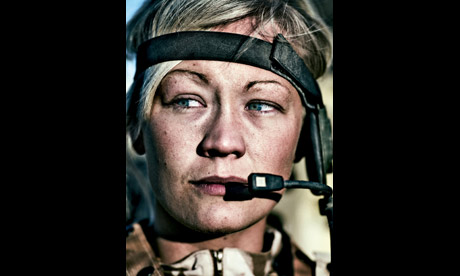
I have opted to present this set of images in black and white for a few reasons: firstly, the portraits they are modelled on were in monochrome and this makes it easier for the viewer to associate the image as being 'natural'; secondly, black and white prints hold a specific photographic verisimilitude in the history of the recorded image so the images' truth claims are enforced; lastly, a greater degree of tone and texture can be provided by the black and white image when processing the RAW file. I may change this aspect so the images are partially coloured so they resemble the work of Robert Wilson [see below].


Robert Wilson, Helmand

The reason for trying to maximise the detail in the images is to present the human qualities, such as hair follicles and pores, as hyperbole. This will contrast beautifully with the manufactured or mechanical attributes within the frame when printed or viewed large.